Fused DepositionModeling(FDM)
Fused Deposition Modeling (FDM) is a popular 3D printing method that builds parts layer by layer using melted thermoplastic filament. It’s cost-effective, widely accessible, and supports a variety of materials and composites.
FDM is ideal for prototyping, functional parts, and low-volume production, offering good strength and durability. While surface finish and detail are lower than resin-based methods, post-processing can improve appearance. Its affordability and material versatility make it a go-to solution for both professionals and hobbyists.
1. A 3D model is sliced into layers and converted into printer-readable G-code.
2. Thermoplastic filament is fed into the printer’s extruder system.
3. The filament is melted in a heated nozzle to prepare it for deposition.
4. Molten plastic is extruded onto the build plate, tracing each layer of the model.
5. Supports are printed where necessary to hold overhanging features.
6. Finished parts are removed, cleaned, and optionally refined or finished.
Key advantages

Cost-effective
Wide material selection
Quick prototyping
Large print area
Minimal waste
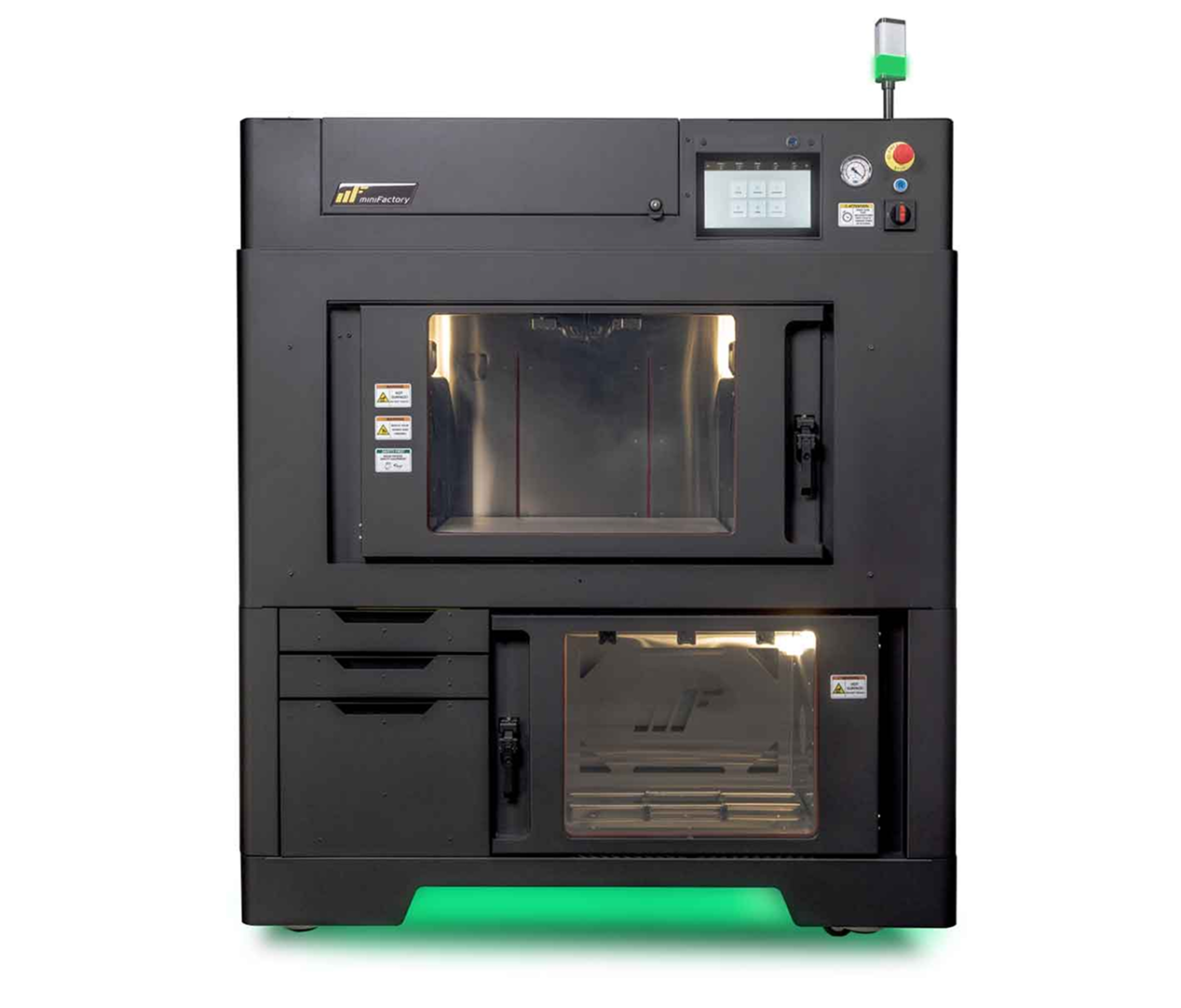
MinifactoryIgnite
- Possibility of printing ultra-polymers
- Build size up to 600 x 400 x 600 mm
- Temperatures (max):
- Build chamber 200°C
- Bed 200°C
- Extruders 480°C
- 2 extruders (Main material + Support material)
- Heated filament chamber up to 120°C
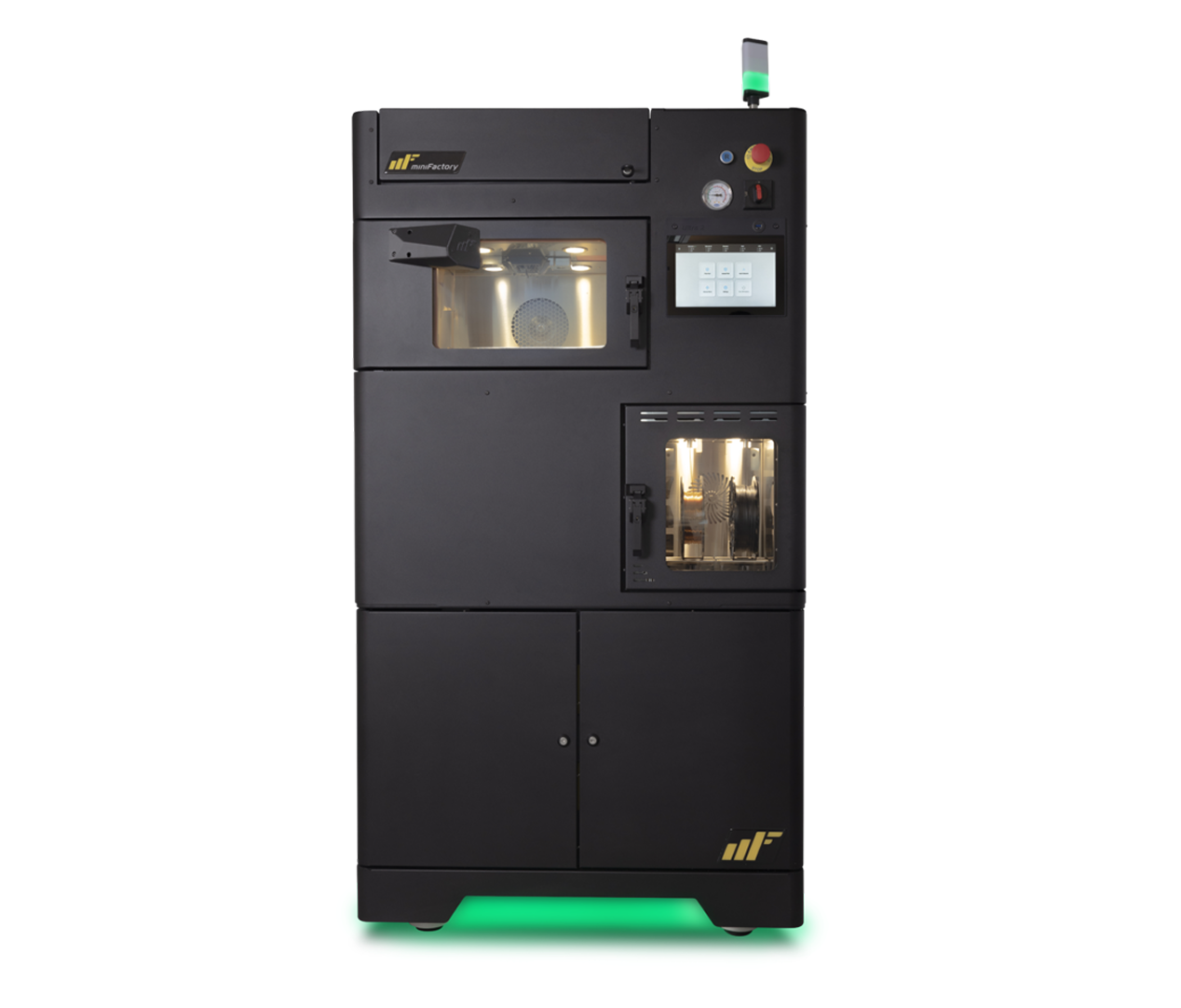
MinifactoryUltra 2
- Possibility of printing ultra-polymers
- Build size up to 330 x 180 x 180 mm
- Temperatures (max):
- Build chamber 250°C
- Bed 250°C
- Extruders 480°C
- 2 extruders (Main material + Support material)
- Heated filament chamber up to 120°C