
MJF/SLSpost-processing
Post-processing is essential to optimize the functional and aesthetic properties of parts produced via Multi Jet Fusion (MJF) and Selective Laser Sintering (SLS). While both technologies yield high-strength, isotropic parts directly from the build, surface roughness, residual powder, and porosity often necessitate secondary operations. Post-processing improves dimensional accuracy, surface finish, mechanical performance, and readiness for end-use or downstream finishing such as coating or assembly.
Vibratory tumbling is a mechanical surface finishing method used to smooth and refine the surface of 3D printed parts. In this process, parts are placed in a vibrating container with abrasive media that gently grinds against the surface. This method is particularly effective for reducing the inherent roughness of powder bed fusion parts, improving tactile quality, and preparing surfaces for further finishing steps such as dyeing or coating.
Benefits
Significantly reduces surface roughness, creating a smoother and more uniform appearance.
Efficient for finishing multiple parts simultaneously.
Prepares parts well for uniform color absorption in subsequent dyeing steps.
Limitations
Slight material removal may affect tight tolerances, especially on fine features or sharp edges.
Not ideal for fragile parts. Slight material removal may affect tight tolerances, especially on fine features or sharp edges.
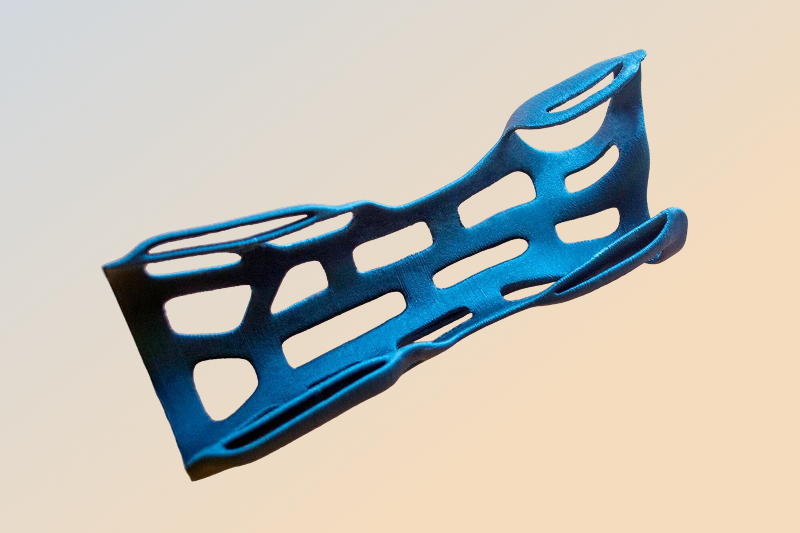
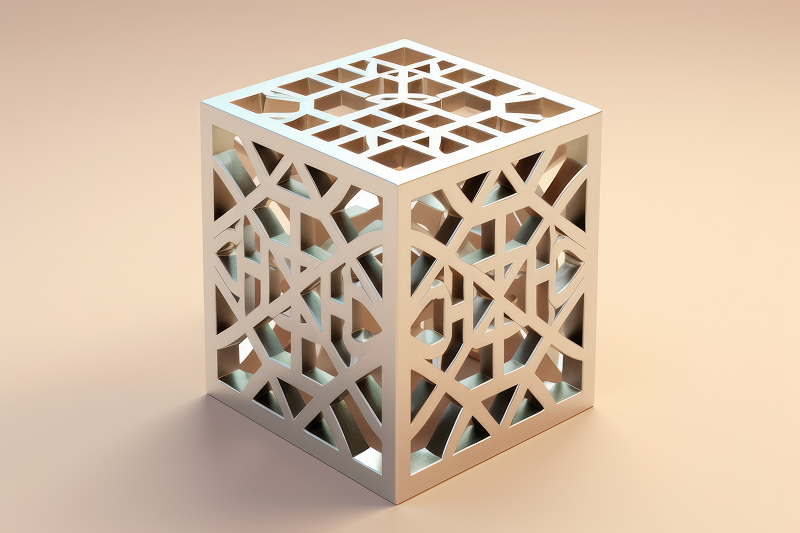

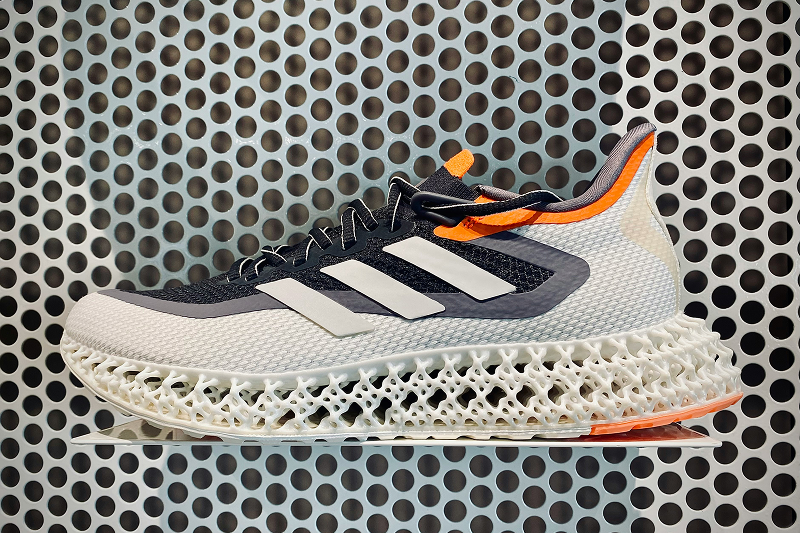


Vapor smoothing is a chemical surface finishing process that uses solvent vapors to selectively melt the outermost layer of 3D printed parts, resulting in a sealed, glossy, and smoother surface.
In operation, the machine exposes parts to a controlled vapor environment, which softens and reflows the outer surface layer. This reduces surface porosity and roughness without compromising bulk mechanical properties. The system is often used to produce parts suitable for consumer-facing or medical applications.
Benefits
Excellent surface finish. Delivers finishes with improved gloss and smoothness.
Reduces porosity, making parts more resistant to moisture and suitable for hygiene-critical or fluid-contact applications.
Improves color depth and uniformity, especially when combined with dyeing.
Limitations
May cause distortion on thin-walled or intricate features; not ideal for parts requiring tight dimensional tolerances.
May not be appropriate for matte or functional surface requirements.
Bead blasting (also referred to as shot blasting) is a mechanical surface treatment in which small abrasive particles are blasted against a part’s surface to remove residual powder, homogenize texture, and improve visual consistency.
In this process, parts are loaded into a rotating basket and exposed to a controlled stream of media under compressed air to produce consistent finishes across batches.
Benefits
Effectively removes residual surface powder from parts, critical for cleanliness and downstream processing.
Ideal as a pre-treatment before dyeing, coating, or bonding - enhancing surface energy and adhesion.
Gentle media options and adjustable parameters allow surface treatment with negligible material removal.
Limitations
While it improves texture, it does not significantly reduce surface roughness compared to processes like vapor smoothing or tumbling.
Without manual blasting the media cannot access complex internal channels or enclosed geometries.
Can cause damage to thin-walled or delicate geometries during the automated process (manual blasting needed in this situation).
Dyeing is a common post-processing technique used to color 3D printed parts. Dyeing offers an effective way to enhance the visual appearance.
The dyeing process is done in a closed chamber at a high temperature and a slight overpressure. The result is a vibrant, uniform coloration that penetrates beneath the surface, making it more durable than surface paints or coatings. It is especially effective on parts that have undergone surface smoothing (e.g., vibratory tumbling or vapor smoothing), which can enhance dye uniformity.